
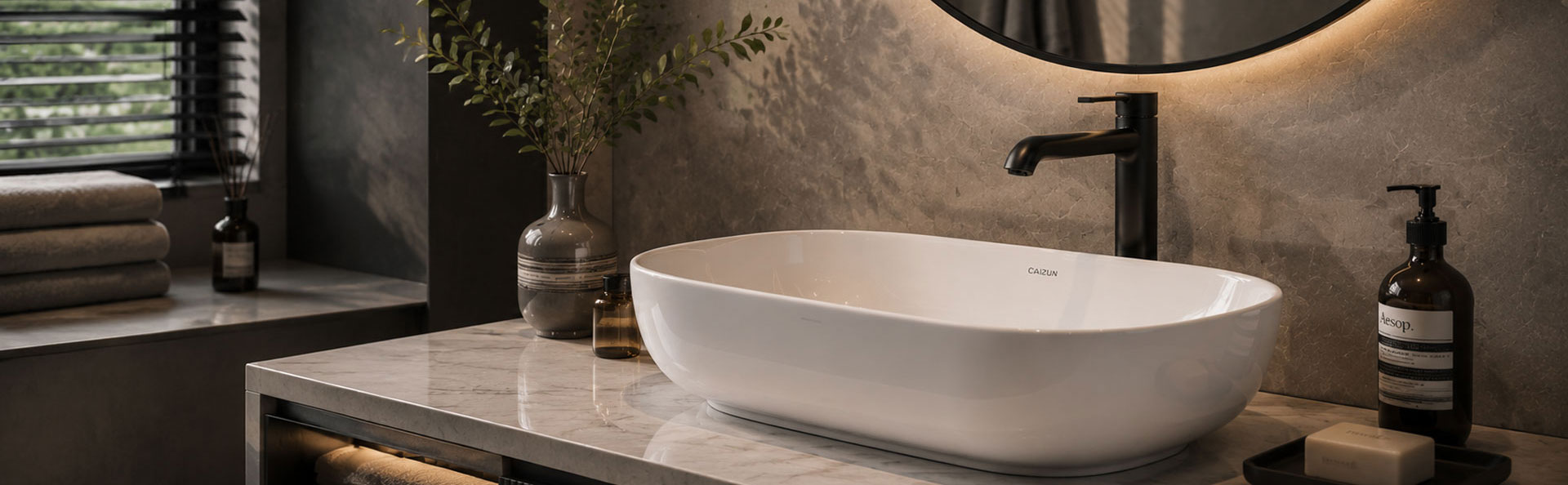
The most suitable bathtub faucet finishes are those that complement the bathroom's overall color palette, coordinate with other fixtures, and meet the maintenance expectations of the intended market. Chrome provides a bright, reflective appearance, brushed finishes offer a softer metallic look, and matte black creates a stronger visual contrast. Gold and champagne tones can add warmth to contemporary or luxury-inspired interiors. However, a finish should not be selected by appearance alone. Surface durability, cleaning requirements, manufacturing consistency, and compatibility with other bathroom fittings all influence whether a finish is appropriate for a coordinated collection.
Which Finishes Suit Different Bathroom Styles?
Modern bathroom collections often combine clean lines with carefully selected materials and colors. The finish of a bathtub faucet can either blend into the overall design or become a focal point.
Chrome: A versatile option for contemporary and transitional bathrooms. Its reflective surface works with many ceramic, glass, and metallic finishes, although water spots and fingerprints may remain visible.
Brushed nickel: Offers a softer metallic appearance with less reflection than polished chrome. It can suit understated interiors and collections emphasizing subtle texture.
Matte black: Creates contrast against light-colored bathtubs, tiles, and countertops. Surface texture and cleaning compatibility should be evaluated before selection.
Brushed gold: Adds a warm metallic accent that can complement neutral stone, cream-colored surfaces, and darker bathroom palettes.
Champagne and other warm metallic tones: Provide alternatives for collections that require a more restrained appearance than bright gold.
These finishes are not restricted to particular interior styles. Their suitability depends on the combination of colors, materials, lighting, and other fixtures in the finished bathroom.
How Can Finish Consistency Be Maintained Across a Collection?
A matching bathtub faucet collection may include basin faucets, shower controls, shower heads, and other accessories. Even when products use the same finish name, their actual colors and textures may differ because of variations in substrate materials, surface preparation, geometry, and finishing processes.
Before approving a collection, establish a physical reference sample and record the required finish characteristics. These may include color, gloss level, surface texture, and brushing direction.
Products with different shapes or base materials may not achieve perfectly identical appearances through the same process. Representative samples should therefore be reviewed together under consistent lighting before mass production begins.
What Should Be Considered When Selecting a Brushed Gold Finish?
A brushed gold tub faucet can provide a distinctive appearance, but gold finishes vary considerably in tone and surface texture. Some appear warm and yellow, while others lean toward champagne or muted bronze.
The selection process should consider three factors:
Color coordination: Compare the faucet with the intended shower fittings, basin faucet, cabinet hardware, and other visible metallic details.
Surface performance: Request appropriate evidence of adhesion, corrosion resistance, or other relevant finish properties.
Maintenance requirements: Confirm which cleaning products and methods are suitable for the selected finish.
A gold appearance does not identify the manufacturing process by itself. Different finishes may be produced through different plating or coating technologies, so the actual process and performance requirements should be confirmed with the manufacturer.
How Do Cleaning Conditions Affect Finish Selection?
Bathroom faucets are regularly exposed to water, soap residue, cleaning products, and sometimes hard-water deposits. These conditions can gradually affect the appearance of a surface if the finish is unsuitable or maintenance practices are too aggressive.
Polished finishes may show water spots clearly, while brushed surfaces can make some minor marks less noticeable. Matte finishes may require particular attention to residue and cleaning methods. None of these finishes is immune to scratching or chemical damage.
For products intended for frequent use, confirm the recommended cleaning procedure and avoid assuming that every decorative finish can withstand the same chemicals.
How Should a Finish Be Specified Before Production?
A clear finish specification reduces the risk of inconsistent color or unexpected appearance changes between orders.
| Specification item | What to confirm |
|---|---|
| Finish reference | Approved physical sample and finish code |
| Appearance | Color, gloss, and surface texture |
| Manufacturing process | Agreed plating or coating method where applicable |
| Performance | Relevant adhesion and corrosion testing |
| Quality acceptance | Permitted variation and unacceptable visible defects |
| Maintenance | Approved cleaning instructions |
A reliable OEM Bathtub Faucet Manufacturer should be able to clarify the proposed finish, its applicable testing, and any limitations affecting consistency across different models.
The best finish is one that complements the bathroom collection, can be reproduced consistently, and remains practical under the intended cleaning and usage conditions. Coordinating appearance, performance, and maintenance requirements before production helps create a cohesive collection without sacrificing product reliability.