
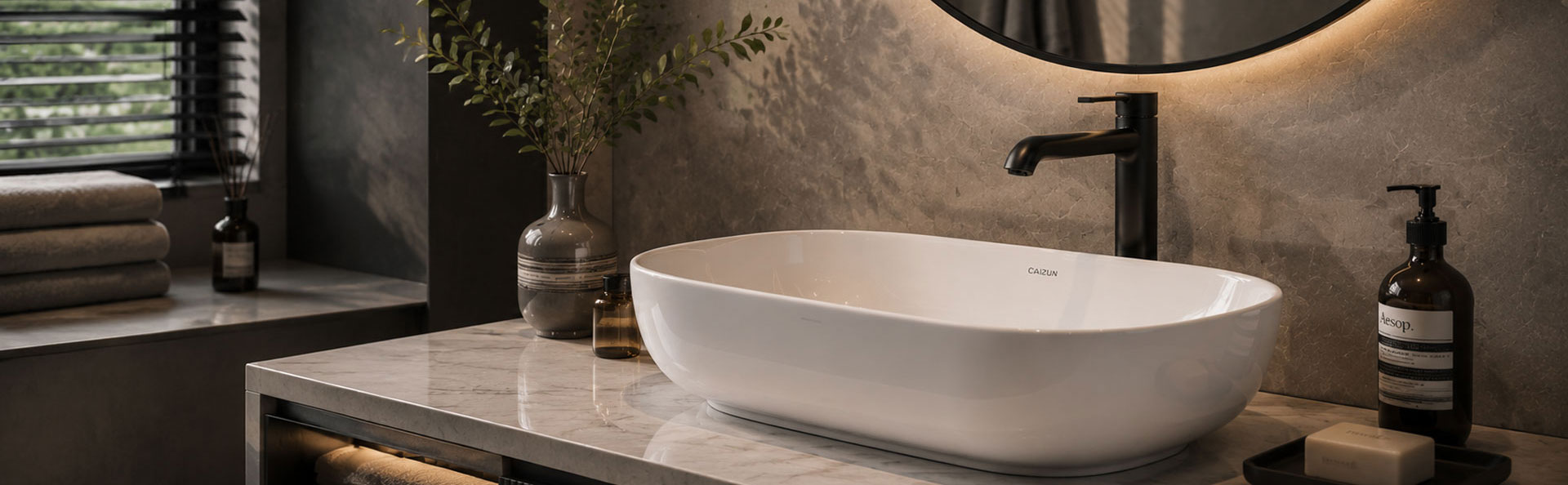
A waterfall basin faucet delivers water through a broad, open outlet that creates a visible sheet or cascade, while a standard spout typically directs water through a more concentrated stream. This difference affects appearance, water delivery, cleaning requirements, and compatibility with the basin. A waterfall design can create a distinctive focal point in a modern bathroom, but its performance depends on outlet geometry, water flow, basin depth, and the position where water lands. A standard spout often offers a more familiar water stream and a wider range of conventional designs. The right option depends on the intended bathroom style as well as practical requirements for daily use.
What Creates the Waterfall Effect?
The defining feature of a waterfall basin faucet is its outlet structure. Instead of directing water through a conventional aerated outlet, many waterfall models use an open channel or broad outlet to produce a sheet-like flow.
The effect depends on several design factors:
Outlet width: Determines how broadly water spreads as it leaves the spout.
Channel geometry: Influences whether the water forms a continuous sheet or separates into uneven streams.
Flow rate: Affects the visual fullness and consistency of the cascade.
Outlet edge: Its shape and finish can influence how smoothly water leaves the spout.
Water pressure: Changes in supply conditions may affect the appearance and stability of the flow.
Not every waterfall faucet operates in exactly the same way. Some designs incorporate aerators or specialized outlet inserts, so the actual flow characteristics should be verified for the selected model.
How Do the Two Spout Designs Compare?
| Feature | Waterfall basin faucet | Standard spout |
|---|---|---|
| Water delivery | Broad sheet or cascade in many designs | More concentrated stream in many designs |
| Visual effect | Decorative and visually prominent | Familiar and often understated |
| Basin compatibility | Requires careful consideration of outlet width and landing position | Depends on spout reach, outlet angle, and flow |
| Cleaning | Open channels may need additional attention to water deposits | Outlet inserts and aerators may require periodic cleaning |
| Design flexibility | Often associated with contemporary bathroom styling | Available in contemporary and traditional designs |
These are general differences. Actual performance depends on the specific outlet construction rather than the product name alone.
Does a Waterfall Faucet Use More Water?
A waterfall effect does not automatically mean higher water consumption. Actual consumption depends on the faucet's flow rate, operating duration, and internal design.
For example, a broad outlet may create a visually full stream, but appearance alone cannot establish how much water is being delivered. The correct comparison requires measured flow rates under comparable test conditions.
When evaluating a model, check its specified flow rate and any applicable water-efficiency requirements. If a project has defined water-use targets, verify that the selected configuration meets those requirements rather than relying on visual impressions.
Which Basin Works Better with a Waterfall Spout?
Basin geometry is particularly important because a broad stream can behave differently from a concentrated outlet.
A shallow basin may be more susceptible to splashing if the water strikes a flat surface at an unsuitable angle. A narrow bowl may also be incompatible with a wide outlet if the stream extends beyond the usable landing area.
Before selecting a waterfall faucet, assess the following:
The horizontal distance from the mounting point to the outlet.
The height of the outlet above the basin rim.
The width and shape of the water stream.
The basin's depth and internal slope.
The expected flow rate and available water pressure.
Testing the faucet with the intended basin is the most reliable way to evaluate splash behavior and everyday usability.
What Maintenance Differences Should Be Considered?
Water deposits can affect both types of faucet, particularly in areas with hard water. Waterfall outlets may have exposed channels or broad edges where mineral residue becomes visible. Standard spouts may have aerators that accumulate sediment and require cleaning.
Maintenance requirements depend on the outlet design, finish, and water conditions. Cleaning instructions should specify suitable products and methods, since abrasive materials or aggressive chemicals can damage decorative finishes.
The outlet should also be inspected for uneven flow, visible deposits, or obstructions that affect water delivery.
Which Design Is Better for a Bathroom Product Range?
A waterfall faucet can help differentiate a collection through its distinctive outlet and visual presentation. A standard spout may offer broader design flexibility for customers seeking conventional functionality or familiar styling.
For product development, compare the complete specifications, including body material, cartridge, finish, outlet geometry, flow rate, and installation dimensions. A Waterfall Faucet Supplier should also be able to clarify the actual flow characteristics and maintenance requirements of the selected model.
Ultimately, the waterfall design is most suitable when its visual effect complements the basin and the outlet performs reliably under the intended conditions. A standard spout is preferable when its stream pattern, dimensions, and styling better match the installation. Neither design is inherently superior; the decision should balance appearance, water delivery, maintenance, and basin compatibility.